
The Research: Audio vs. Written Instructions
You have done everything right – you have an action plan, you have trained your child, and you have notified the school. But when panic strikes and everything happens at once – can someone truly read a full page of text and act correctly?
Research shows that audio instructions perform better
Studies with Automated External Defibrillators (AEDs):

95.8% success rate – voice support provides almost guaranteed success (Gundry, 1999).
Shock in 81 seconds – voice guidance results in faster intervention (Beckers, 2005).
Reduced stress – audio instructions lower the mental pressure (Eames, 2003)..
Fewer mistakes – voice control prevents critical steps from being forgotten (Andre, 2004).
94.1% accuracy – voice support ensures correct and safe handling (Beckers, 2005).
Faster decisions – the voice eliminates hesitation and interpretation errors (Gundry, 1999).
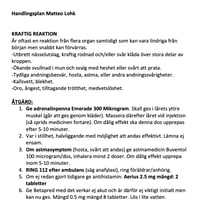
Only 40% success rate – more than half fail completely without voice support (Gundry, 1999).
Significantly slower – it often takes several minutes to interpret the text (Beckers, 2005).
High cognitive stress – text is difficult to read during acute panic (Eames, 2003).
More critical errors – instructions are misread or skipped entirely (Andre, 2004).
Increased hesitation – text forces the user to make difficult decisions themselves (Gundry, 1999).
Lower safety – the risk of incorrect use increases without guidance (Beckers, 2005).
What this means for your child
Faster help
Teachers, relatives, and friends don't need to read. They listen and act immediately.
Safer actions
No guessing, no improvisation. Just exact, step-by-step instructions.
Less stress for everyone
A calm voice guides them through every step. No reading during panic.
Works for everyone
Regardless of reading level, age, or stress level.
Proven system
The same method that has saved thousands of lives with AEDs.
No delay
From emergency to the right action in seconds, not minutes.